
By Greg Louviere
School districts are making important decisions about aging facilities while responding to evolving educational needs. Too often, the conversation begins with a familiar question:
Should we renovate or build new?
A more valuable starting point may be:
What could this school become?
Before deciding whether a facility should be replaced, districts can evaluate what it already contributes, where it falls short, and what thoughtful planning and design could unlock. New construction may still be the right answer, but meaningful transformation does not always require starting over.
“
This shift in perspective changes the conversation from “How old is this school?” to “What could this school become?”
School districts are making important decisions about aging facilities while responding to evolving educational needs. Too often, the conversation begins with a familiar question:
Should we renovate or build new?
A more valuable starting point may be:
What could this school become?
Before deciding whether a facility should be replaced, districts can evaluate what it already contributes, where it falls short, and what thoughtful planning and design could unlock. New construction may still be the right answer, but meaningful transformation does not always require starting over.
“
This shift in perspective changes the conversation from “How old is this school?” to “What could this school become?”


While classrooms remain essential, today’s students move between direct instruction, collaboration, independent work, presentations, and project-based learning throughout the day. Effective renewal responds to these changes by creating stronger connections among spaces and supporting a broader range of learning experiences.
The library provides a useful example. Historically designed as repositories for books and quiet study, these spaces can evolve into learning commons that support research, collaboration, technology integration, creativity, and community engagement. Their original purpose is not lost; it is expanded to serve contemporary learning needs.
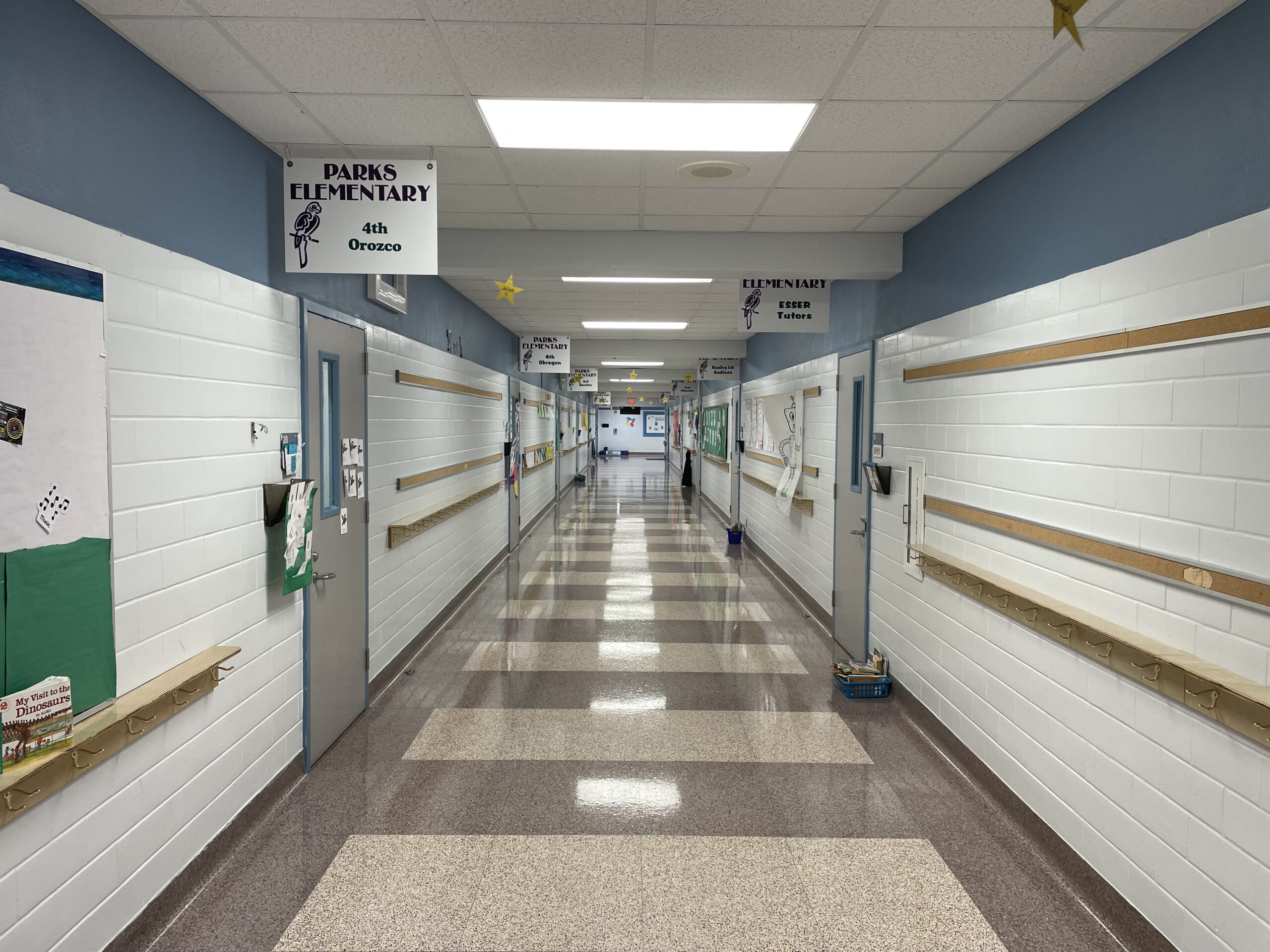
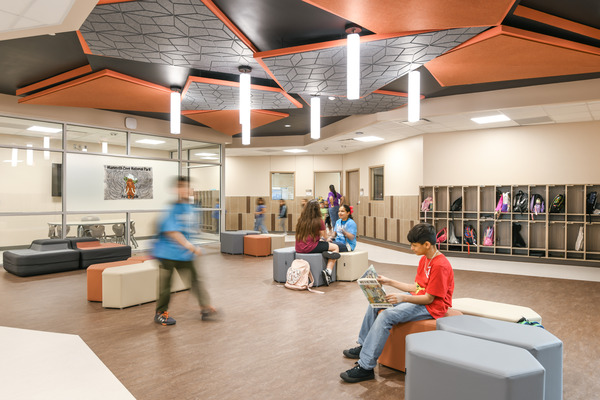
Similar opportunities often exist throughout the building. Underutilized spaces can support collaboration. Corridors can become extensions of learning. Existing rooms can be adapted to accommodate emerging programs and instructional approaches. Success is not measured by how dramatically the architecture changes, but by the broader range of learning experiences the environment makes possible.
LEARNING HAS CHANGED. SCHOOLS CAN TOO.


LEARNING HAS CHANGED. SCHOOLS CAN TOO.
While classrooms remain essential, today’s students move between direct instruction, collaboration, independent work, presentations, and project-based learning throughout the day. Effective renewal responds to these changes by creating stronger connections among spaces and supporting a broader range of learning experiences.
The library provides a useful example. Historically designed as repositories for books and quiet study, these spaces can evolve into learning commons that support research, collaboration, technology integration, creativity, and community engagement. Their original purpose is not lost; it is expanded to serve contemporary learning needs.
Similar opportunities often exist throughout the building. Underutilized spaces can support collaboration. Corridors can become extensions of learning. Existing rooms can be adapted to accommodate emerging programs and instructional approaches. Success is not measured by how dramatically the architecture changes, but by the broader range of learning experiences the environment makes possible.
While classrooms remain essential, today’s students move between direct instruction, collaboration, independent work, presentations, and project-based learning throughout the day. Effective renewal responds to these changes by creating stronger connections among spaces and supporting a broader range of learning experiences.
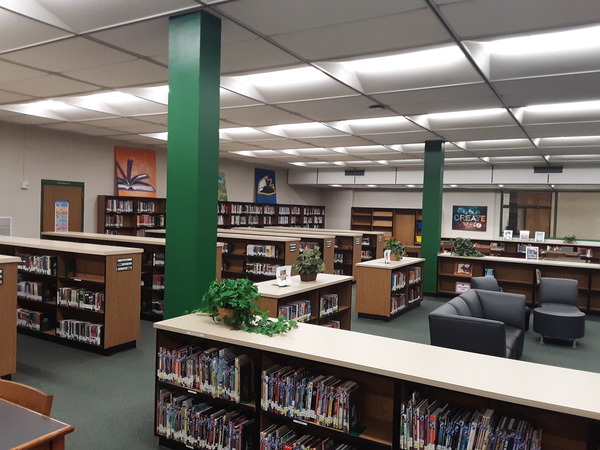
The library provides a useful example. Historically designed as repositories for books and quiet study, these spaces can evolve into learning commons that support research, collaboration, technology integration, creativity, and community engagement. Their original purpose is not lost; it is expanded to serve contemporary learning needs.
Similar opportunities often exist throughout the building. Underutilized spaces can support collaboration. Corridors can become extensions of learning. Existing rooms can be adapted to accommodate emerging programs and instructional approaches. Success is not measured by how dramatically the architecture changes, but by the broader range of learning experiences the environment makes possible.

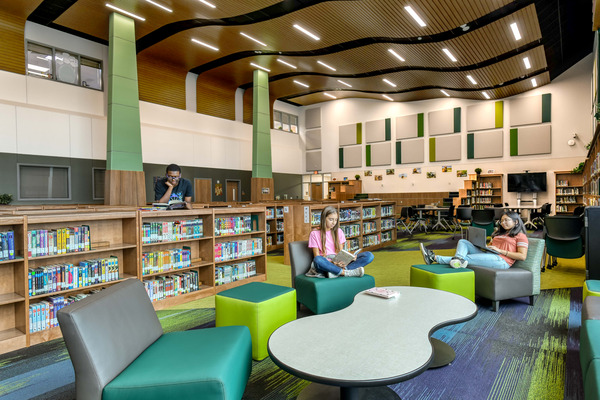
LIBRARIES REFRAMED.
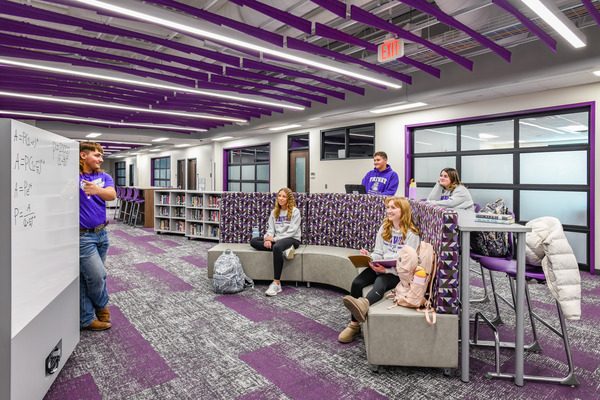
CORRIDORS BECOME AN EXTENSION OF LEARNING.
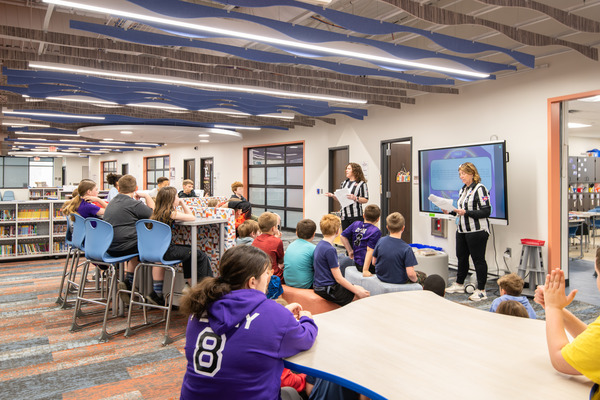

CORRIDORS BECOME AN EXTENSION OF LEARNING.

LIBRARIES REFRAMED.
While classrooms remain essential, today’s students move between direct instruction, collaboration, independent work, presentations, and project-based learning throughout the day. Effective renewal responds to these changes by creating stronger connections among spaces and supporting a broader range of learning experiences.
The library provides a useful example. Historically designed as repositories for books and quiet study, these spaces can evolve into learning commons that support research, collaboration, technology integration, creativity, and community engagement. Their original purpose is not lost; it is expanded to serve contemporary learning needs.
Similar opportunities often exist throughout the building. Underutilized spaces can support collaboration. Corridors can become extensions of learning. Existing rooms can be adapted to accommodate emerging programs and instructional approaches. Success is not measured by how dramatically the architecture changes, but by the broader range of learning experiences the environment makes possible.

While classrooms remain essential, today’s students move between direct instruction, collaboration, independent work, presentations, and project-based learning throughout the day. Effective renewal responds to these changes by creating stronger connections among spaces and supporting a broader range of learning experiences.
The library provides a useful example. Historically designed as repositories for books and quiet study, these spaces can evolve into learning commons that support research, collaboration, technology integration, creativity, and community engagement. Their original purpose is not lost; it is expanded to serve contemporary learning needs.
Similar opportunities often exist throughout the building. Underutilized spaces can support collaboration. Corridors can become extensions of learning. Existing rooms can be adapted to accommodate emerging programs and instructional approaches. Success is not measured by how dramatically the architecture changes, but by the broader range of learning experiences the environment makes possible.
SENSE OF BELONGING.

SENSE OF BELONGING.
While classrooms remain essential, today’s students move between direct instruction, collaboration, independent work, presentations, and project-based learning throughout the day. Effective renewal responds to these changes by creating stronger connections among spaces and supporting a broader range of learning experiences.
The library provides a useful example. Historically designed as repositories for books and quiet study, these spaces can evolve into learning commons that support research, collaboration, technology integration, creativity, and community engagement. Their original purpose is not lost; it is expanded to serve contemporary learning needs.
Similar opportunities often exist throughout the building. Underutilized spaces can support collaboration. Corridors can become extensions of learning. Existing rooms can be adapted to accommodate emerging programs and instructional approaches. Success is not measured by how dramatically the architecture changes, but by the broader range of learning experiences the environment makes possible.
Existing schools possess one asset that cannot be easily replicated through new construction: memory.
Generations of students may recognize a school through its entrance, traditions, or relationship to the surrounding neighborhood. These elements help establish a sense of identity and belonging that connects past, present, and future.
Educational renewal provides an opportunity to strengthen those connections rather than erase them. District leaders can consider what makes a school distinctive, which aspects of its identity should be preserved, which traditions continue to matter, and what story the school should tell moving forward.
The answers can shape decisions about architecture, graphics, furnishings, displays, and public spaces—creating an environment that reinforces belonging while expressing a vision for the future.
The goal is not simply to improve the building. It is to strengthen the school’s role within the community.
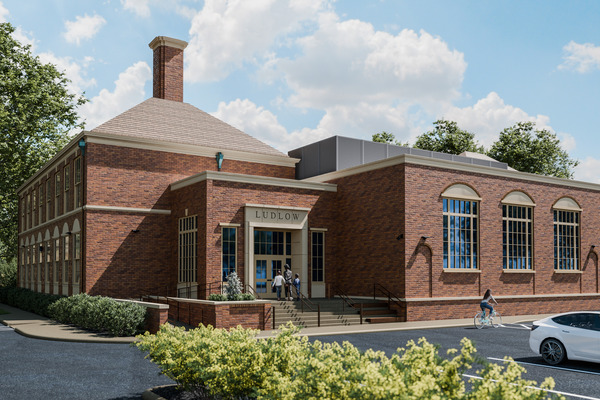
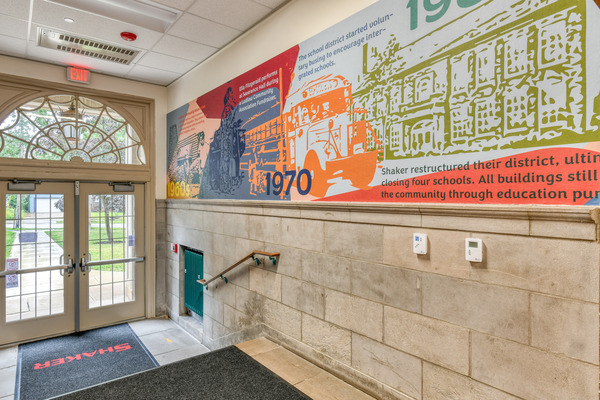
STRENGTHEN CONNECTIONS BETWEEN THE PAST & PRESENT

STRENGTHEN CONNECTIONS BETWEEN THE PAST & PRESENT
Existing schools possess one asset that cannot be easily replicated through new construction: memory.
Generations of students may recognize a school through its entrance, traditions, or relationship to the surrounding neighborhood. These elements help establish a sense of identity and belonging that connects past, present, and future.
Educational renewal provides an opportunity to strengthen those connections rather than erase them. District leaders can consider what makes a school distinctive, which aspects of its identity should be preserved, which traditions continue to matter, and what story the school should tell moving forward.
The answers can shape decisions about architecture, graphics, furnishings, displays, and public spaces—creating an environment that reinforces belonging while expressing a vision for the future.
The goal is not simply to improve the building. It is to strengthen the school’s role within the community.

COORDINATED STRATEGY FOR SITE IMPROVEMENTS.
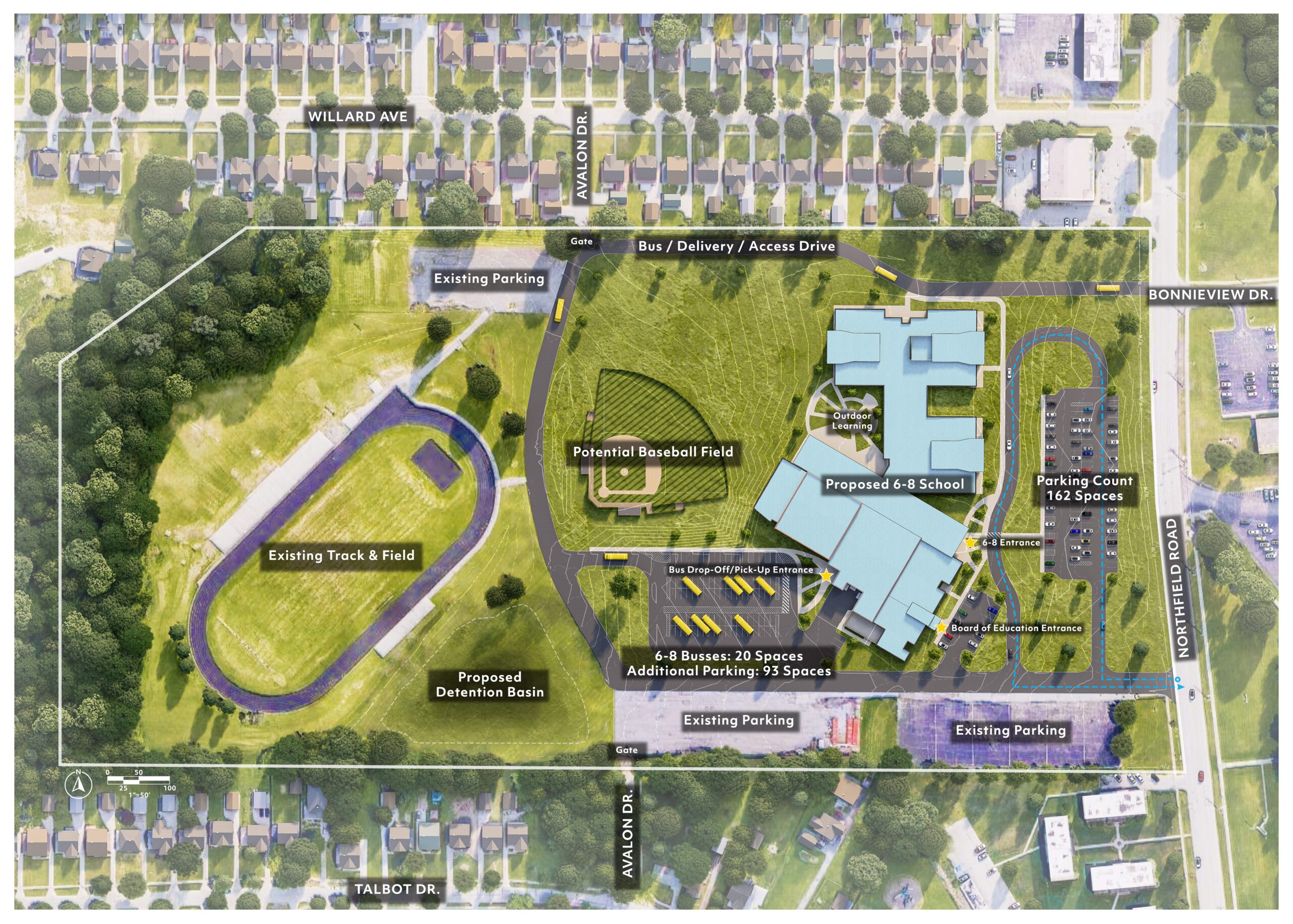
Educational renewal extends beyond the walls of the school.
Many campuses were planned before today’s expectations regarding security, accessibility, and community use became standard considerations. Thoughtful site renewal provides an opportunity to evaluate pedestrian pathways, bus circulation, parent drop-off areas, and security as part of a coordinated strategy rather than a collection of isolated improvements.
When successful, these interventions transform the site from a source of operational challenges into a welcoming point of connection between the school and its community.

COORDINATED STRATEGY FOR SITE IMPROVEMENTS.
Educational renewal extends beyond the walls of the school.
Many campuses were planned before today’s expectations regarding security, accessibility, and community use became standard considerations. Thoughtful site renewal provides an opportunity to evaluate pedestrian pathways, bus circulation, parent drop-off areas, and security as part of a coordinated strategy rather than a collection of isolated improvements.
When successful, these interventions transform the site from a source of operational challenges into a welcoming point of connection between the school and its community.
Perhaps the most important distinction is the difference between modernization and renewal.
Modernization focuses on replacing what has become obsolete. Renewal asks a broader question: Do these improvements work together to create a better educational environment?
Successful renewal requires alignment among educational vision, teaching practices, professional learning, administration, operations, technology, and design. The building is not the entire solution. It is one part of a larger educational ecosystem. When those elements align, a district is no longer assembling a list of capital improvements. It is creating a coordinated strategy focused on educational outcomes.
The decision to renovate or replace will always require careful consideration of building conditions, educational needs, economics, and long-term district priorities. In some circumstances, new construction will be the right answer.
What needs to be replaced?

- Systems
- Components
- Infrastructure
- Compliance
What does this school need to make it possible?

- Learning
- Experience
- Identity
- Community
- Operations
- Adaptability

Perhaps the most important distinction is the difference between modernization and renewal.
Modernization focuses on replacing what has become obsolete. Renewal asks a broader question: Do these improvements work together to create a better educational environment?
Successful renewal requires alignment among educational vision, teaching practices, professional learning, administration, operations, technology, and design. The building is not the entire solution. It is one part of a larger educational ecosystem. When those elements align, a district is no longer assembling a list of capital improvements. It is creating a coordinated strategy focused on educational outcomes.
The decision to renovate or replace will always require careful consideration of building conditions, educational needs, economics, and long-term district priorities. In some circumstances, new construction will be the right answer.
What needs to be replaced?

- Systems
- Components
- Infrastructure
- Compliance
What does this school need to make it possible?

- Learning
- Experience
- Identity
- Community
- Operations
- Adaptability

